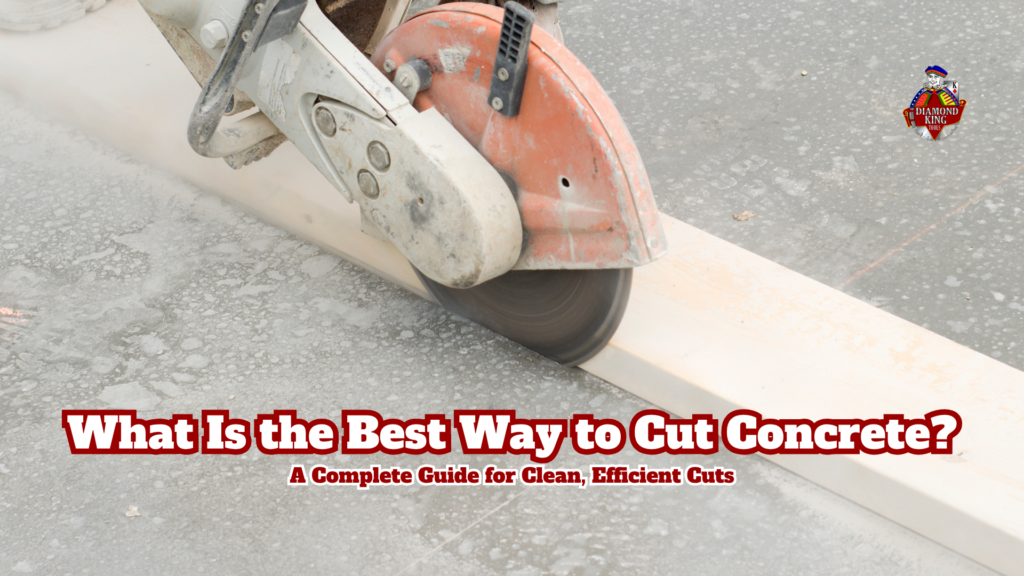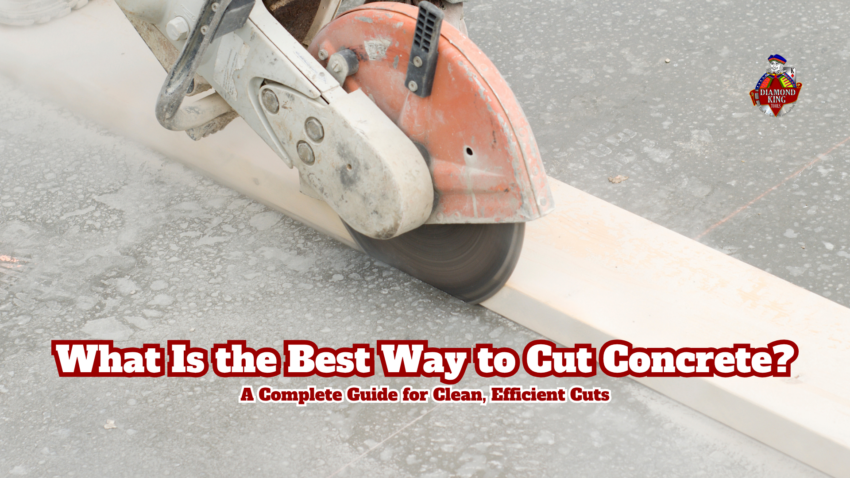
If you’re wondering, what is the best way to cut concrete? The best method depends on the thickness of the concrete, the type of cut you need to make, the equipment available, and whether the job is indoors or outdoors.
For many professional applications, the best way to cut concrete is to use the right concrete saw paired with a high-quality diamond blade designed for the material being cut. Wet cutting is often preferred when practical because water can help control dust and keep the blade cool. However, dry cutting may be the better option for certain jobs where portability and convenience are important.
Choosing the right method before you start can improve cutting speed, produce cleaner results, reduce wear on your equipment, and help make the job safer.
What Is the Best Way to Cut Concrete?
The short answer is that the best way to cut concrete is to match the saw and diamond blade to the specific application, then use proper cutting techniques without forcing the equipment.
For example:
- A handheld power cutter is often ideal for smaller jobs and tight spaces.
- A walk-behind concrete saw is better suited for large slabs and long, straight cuts.
- An angle grinder can be useful for shallow cuts and detail work.
- A concrete chainsaw may be the right choice for certain deep cuts and openings.
- A high-quality diamond blade should always be selected based on the concrete and application.
There is no single piece of equipment that is best for every concrete cutting job. The goal is to use the most appropriate tool for the depth, location, and type of cut you need.
Start With the Right Diamond Blade
A diamond blade is one of the most important parts of the concrete cutting process.
Unlike a traditional blade with sharp teeth, a diamond blade uses industrial diamonds to grind through hard materials. As the blade cuts, the metal bond gradually wears and exposes new diamonds to help maintain cutting performance.
When selecting a blade, consider:
- The type of concrete being cut
- Whether the concrete contains rebar
- The blade diameter required by your saw
- Whether you are wet cutting or dry cutting
- The desired cutting speed and blade life
Using the wrong blade can result in slower cutting, excessive heat, premature wear, and unnecessary strain on your saw.
For professional contractors, choosing a high-quality diamond blade designed for the application can make a major difference in productivity.
Choose the Right Saw for the Job
The best way to cut concrete also depends on the equipment being used.
Handheld Power Cutters
Handheld concrete saws are popular because they are portable and versatile. They can be used for cutting concrete, block, brick, pavers, and other masonry materials.
They are especially useful when working in:
- Tight spaces
- Vertical applications
- Smaller projects
- Areas where larger equipment cannot easily reach
Walk-Behind Concrete Saws
For large slabs, roads, sidewalks, and other flat surfaces, a walk-behind saw is often the better choice.
These saws provide stability and are well suited for long, straight cuts. They can also be equipped with larger diamond blades for increased cutting depth.
Angle Grinders
An angle grinder with a compatible diamond blade can be useful for shallow cuts, small adjustments, and detail work.
Because angle grinders are generally smaller, they are not usually the best choice for deep or large-scale concrete cutting.
Wet Cutting vs. Dry Cutting
Another important decision is whether to cut concrete wet or dry.
Wet Cutting
Wet cutting uses water at the cutting area to help:
- Reduce airborne dust
- Cool the blade
- Reduce heat
- Flush debris from the cut
- Support consistent cutting performance
When the equipment and blade are designed for wet cutting, water can be especially helpful during longer or more demanding cuts.
Dry Cutting
Dry cutting is often more portable and convenient because it does not require a water supply.
However, dry cutting can create significant dust and heat. Always use a blade rated for dry cutting, follow the equipment manufacturer’s instructions, and use appropriate dust control and respiratory protection.
Mark the Cut Before You Start
One of the simplest ways to achieve a cleaner result is to carefully mark your cutting line before starting.
Measure the area and clearly mark where the cut needs to be made. For longer cuts, using a straightedge or chalk line can help maintain accuracy.
Before cutting, make sure the concrete is stable and that there are no unexpected obstacles in the cutting path.
Taking a few extra minutes to prepare can help prevent costly mistakes.
Make Multiple Passes for Deeper Cuts
When cutting thick concrete, it is often better to make multiple controlled passes rather than trying to reach full depth immediately.
Start with a shallow guide cut and gradually increase the depth with additional passes when appropriate for the equipment and blade.
This approach can help:
- Improve cut accuracy
- Reduce stress on the saw
- Prevent excessive heat buildup
- Improve blade performance
- Make the cutting process easier to control
Avoid forcing the blade into the concrete. Let the blade and saw do the work at a steady, controlled pace.
Safety Should Always Come First
Concrete cutting can produce dust, debris, noise, vibration, and other jobsite hazards.
Before cutting, inspect the saw and diamond blade for damage. Make sure the blade is properly installed and compatible with the equipment.
Appropriate safety equipment may include:
- Eye protection
- Hearing protection
- Respiratory protection when needed
- Gloves
- Protective footwear
- Appropriate work clothing
Always follow the saw and blade manufacturer’s instructions and applicable jobsite safety requirements.
Why Proper Technique Matters
Even the best diamond blade cannot perform at its full potential if the saw is operated incorrectly.
Common mistakes to avoid include:
- Forcing the saw through the concrete
- Using the wrong blade for the application
- Cutting at an improper depth
- Twisting or binding the blade
- Using a damaged blade
- Exceeding the blade’s rated RPM
- Ignoring excessive vibration or unusual cutting performance
Proper technique can help extend blade life, protect the saw, and improve the overall quality of the cut.
Final Answer: What Is the Best Way to Cut Concrete?
So, what is the best way to cut concrete?
For most jobs, the best approach is to use the correct concrete saw with a high-quality diamond blade matched to the material and application. Prepare and mark the cutting area, use wet cutting when practical and appropriate, make controlled passes for deeper cuts, and avoid forcing the equipment.
The best concrete cutting setup will vary from one project to another. A handheld power cutter may be ideal for one job, while a walk-behind saw or specialized cutting tool may be better for another.
The key is selecting the right equipment and blade for the work. When contractors match their tools to the application and use proper cutting techniques, they can achieve faster cuts, better results, longer blade life, and improved productivity.
For professional-grade diamond blades and cutting equipment, Diamond King Tools helps contractors find the right tools for the job so they can keep cutting efficiently and confidently.