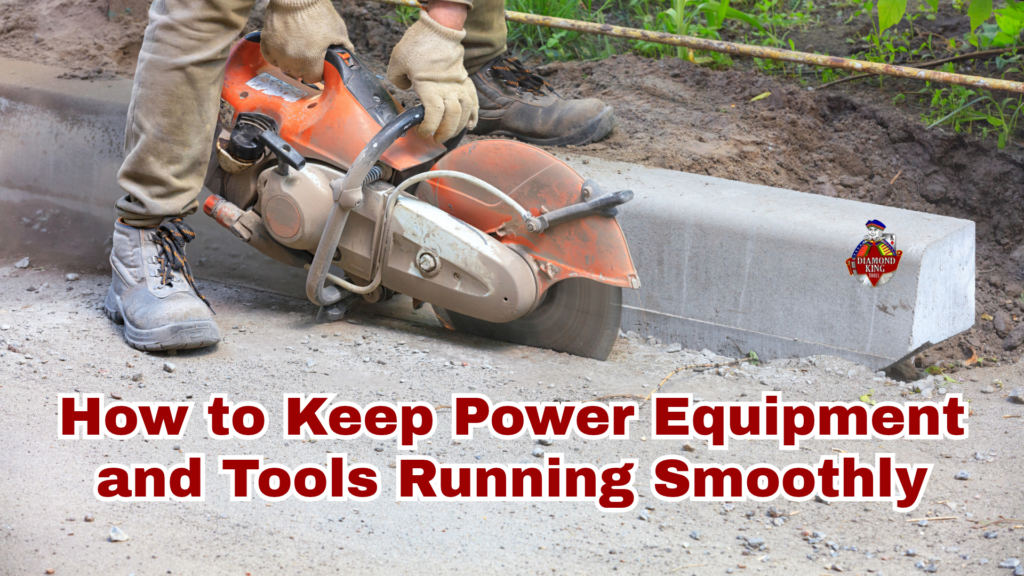
Power equipment and tools are essential for getting jobs done efficiently. Whether you’re cutting concrete, operating a power cutter, using a grinder, or working with outdoor power equipment, keeping your tools in good condition can help reduce downtime and extend their service life.
The good news is that regular cleaning, routine inspections, proper maintenance, and correct storage can help keep power equipment running smoothly.
You don’t need to wait until a tool stops working to give it attention. A few simple maintenance habits can help you identify potential problems before they interrupt your next job.
Why Is Power Equipment Maintenance Important?
Power equipment works hard, especially on busy construction sites. Dust, dirt, vibration, heat, and regular wear can affect performance over time.
Without proper maintenance, equipment may become harder to start, lose performance, overheat, or require more frequent repairs.
Routine maintenance helps you:
- Reduce unnecessary equipment downtime.
- Identify worn or damaged parts early.
- Maintain reliable performance.
- Protect your investment in professional tools.
- Improve jobsite readiness.
- Help extend equipment service life.
For contractors, a tool that is ready when the crew needs it can make a real difference in daily productivity.
1. Clean Your Tools After Every Job
One of the easiest ways to keep power equipment running smoothly is to clean it regularly.
Construction work creates plenty of dust and debris. Concrete dust, dirt, grass, and other material can accumulate around air vents, cooling areas, guards, and moving components.
Over time, this buildup can interfere with proper operation.
After each job, remove loose debris and wipe down accessible surfaces. Use the cleaning methods recommended by the equipment manufacturer.
For concrete-cutting tools, pay particular attention to areas where dust and cutting residue can accumulate. Keep cooling vents clear and inspect guards for buildup or damage.
Important: Switch off the equipment and disconnect the power source before cleaning or performing maintenance. Never place your hands near moving parts, and allow hot equipment to cool before handling it.
2. Inspect Equipment Before Every Use
A quick inspection before starting work can help catch small problems before they become expensive repairs.
Check your tools for visible damage, loose fasteners, unusual wear, and other signs that something may be wrong.
Depending on the equipment, inspect:
- Power cords and electrical connections.
- Batteries and battery contacts.
- Housings, handles, and guards.
- Blades, cutting accessories, and mounting hardware.
- Fuel lines and signs of leaks.
- Bolts, screws, and other fasteners.
Never operate equipment with damaged safety components or accessories.
If you notice unusual vibration, strange noises, overheating, or reduced performance, stop using the tool and investigate the problem according to the manufacturer’s instructions.
3. Maintain Air Filters, Oil, and Spark Plugs
Gas-powered equipment requires regular engine maintenance to perform reliably.
A dirty air filter can restrict airflow, while old or contaminated fuel can contribute to starting and running problems. Worn spark plugs and incorrect oil levels can also affect engine performance.
To help keep gas-powered equipment in good condition:
- Check the air filter at the recommended intervals.
- Clean or replace filters as directed by the manufacturer.
- Check engine oil levels before use when required.
- Replace spark plugs according to the maintenance schedule.
- Use the correct fuel and oil for your specific machine.
- Inspect fuel lines and connections for leaks or damage.
Always follow the equipment manual. Maintenance intervals and requirements vary by engine and model.
4. Use the Correct Fuel and Follow Mixing Instructions
Using the wrong fuel or an incorrect fuel-to-oil mixture can cause serious problems in equipment that requires mixed fuel.
Some two-stroke engines require gasoline mixed with a specific type of two-stroke engine oil. Other machines use separate fuel and oil systems.
Never assume every gas-powered tool uses the same fuel mixture.
Check the owner’s manual for the correct fuel type, octane requirements, oil specification, and mixing ratio. Use fresh fuel and follow the manufacturer’s storage recommendations.
If your equipment has been sitting unused for an extended period, inspect the fuel before starting it.
Correct fuel handling can help reduce starting problems and protect engine components.
5. Keep Batteries and Electrical Tools in Good Condition
Battery-powered tools require a different maintenance routine from gas-powered equipment.
Start by keeping battery contacts clean and dry. Inspect the battery for cracks, swelling, leaks, or other damage. Never use or charge a damaged battery.
You should also:
- Keep cooling vents clear of dust and debris.
- Use the charger approved for your battery.
- Store batteries in a cool, dry location within the manufacturer’s recommended temperature range.
- Avoid exposing batteries to excessive heat or moisture.
- Remove batteries before cleaning or servicing the tool.
For corded tools, inspect the power cord and plug for damage before use.
Good battery and electrical maintenance helps support dependable operation and reduces the risk of equipment damage.
6. Check Cutting Accessories and Moving Parts
The condition of your accessories can affect how hard your equipment has to work.
For example, a damaged or unsuitable cutting accessory can cause poor performance and unnecessary strain on a tool. A diamond blade must be appropriate for the material, saw, diameter, and operating speed.
Before using cutting equipment, inspect the blade for visible damage and excessive wear. Verify that it is mounted correctly and that its maximum rated speed is compatible with the machine.
Also, follow the manufacturer’s instructions for lubrication, moving parts, and accessory replacement.
Never use a damaged cutting blade or an accessory that is incompatible with your equipment.
7. Follow a Regular Maintenance Schedule
Waiting until something breaks is rarely the best maintenance strategy.
Instead, follow the maintenance schedule provided by the manufacturer. Some checks may be needed before every use, while other tasks are based on operating hours, calendar intervals, or seasonal requirements.
A simple maintenance log can help you track service dates, inspections, repairs, and replacement parts.
For businesses with multiple tools, label equipment and record maintenance so your team knows when each machine was last serviced.
Consistent maintenance makes it easier to identify recurring problems and prepare equipment for upcoming projects.
8. Store Power Equipment Properly
Proper storage is especially important when equipment won’t be used for several weeks or months.
Before storing your tools, clean them thoroughly and inspect them for damage. Store equipment in a dry, secure location and protect it from moisture, excessive heat, and other damaging conditions.
For gas-powered equipment, follow the manufacturer’s instructions for fuel treatment or draining the fuel system during extended storage.
For battery-powered tools, remove and store batteries as directed. Avoid leaving batteries exposed to extreme temperatures.
Taking time to prepare equipment for storage can help reduce problems when you’re ready to put it back to work.
9. Know When to Get Professional Service
Basic cleaning and routine inspections can help prevent many common problems. However, some repairs require specialized tools, training, or replacement components.
Seek qualified service if equipment continues to run poorly, overheats, leaks fuel, produces unusual vibration, or shows signs of electrical damage.
Never bypass safety features or attempt repairs beyond your training.
Addressing a problem early may prevent additional damage and help you get the equipment back to work safely.
Keep Your Power Equipment Ready for the Next Job
Keeping power equipment and tools running smoothly doesn’t have to be complicated.
Clean your tools after use, inspect them before each job, follow the manufacturer’s maintenance schedule, use the correct fuel or battery, and store equipment properly.
These habits can help reduce downtime, protect your investment, and keep your crew better prepared for the next project.
At Diamond King Tools, we understand how important dependable equipment is to contractors and how to keep power equipment running smoothly. Whether you’re working with diamond blades, concrete-cutting equipment, grinders, or other jobsite tools, choosing the right products and maintaining them properly can help you get more from your equipment.
Need help finding the right tools or cutting accessories for your next job? Reach out to Diamond King Tools for more information.