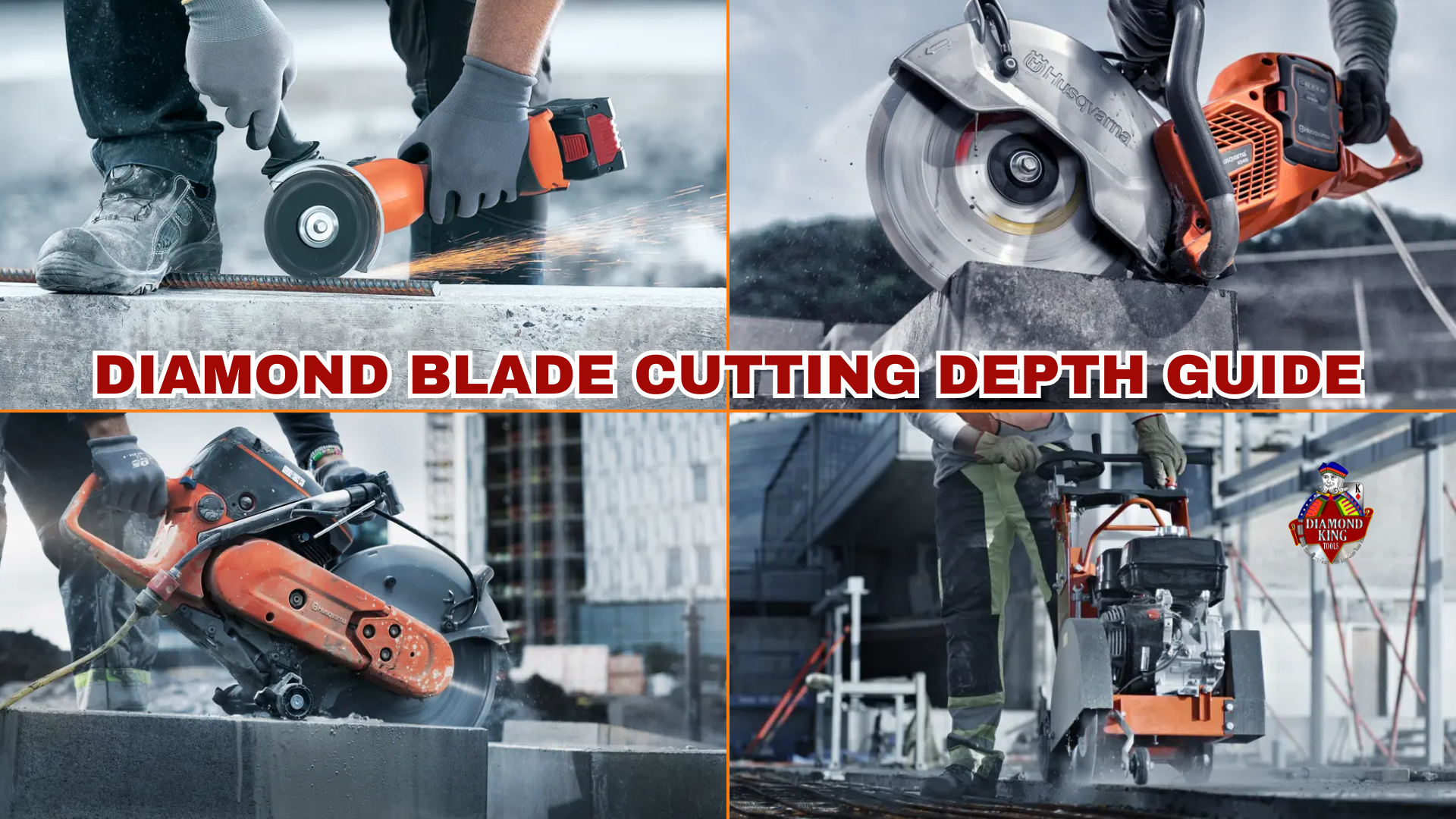
When choosing the right diamond blade for your job, one of the most important factors to consider is cutting depth. Whether you are cutting concrete, asphalt, brick, or pavers, the depth a blade can reach will determine how efficiently you can complete the job.
Understanding diamond blade cutting depth helps you select the right tool, avoid multiple passes, and improve overall jobsite productivity.
What Determines Diamond Blade Cutting Depth?
The cutting depth of a diamond blade is primarily determined by the diameter of the blade and the type of saw being used.
A simple rule most contractors follow is:
Divide the diameter of the blade by 2 and then subtract an inch. Doing this will give a rough estimate for a diamond blades cutting depth.
However, real-world cutting depth can change due to:
- Saw guard limitations
- Arbor size and mounting
- Cutting angle and stability
- Blade exposure
Maximum cutting depth is typically about one-third to just under one-half of the blade diameter.
Diamond Blade Cutting Depth by Size
Here is a breakdown of common blade sizes and their approximate cutting depths.
4-Inch Diamond Blade
- Approximate Depth: 1 inch to 1.5 inches
- Common Uses: Tile, masonry, light concrete work
Small blades are ideal for detail work and tight spaces, but they are limited in depth and not suited for heavy-duty cutting.
7-Inch Diamond Blade
- Approximate Depth: 2 inches to 2.5 inches
- Common Uses: Pavers, bricks, small slabs
This is a popular size for handheld grinders and small saws, offering a balance between portability and cutting capability.
10-Inch Diamond Blade
- Approximate Depth: 3 inches to 3.5 inches
- Common Uses: Concrete, asphalt, general construction
10-inch blades are widely used in cut-off saws and are a go-to option for many contractors.
14-Inch Diamond Blade
- Approximate Depth: 5 inches to 6 inches
- Common Uses: Heavy-duty concrete and asphalt cutting
A 14-inch blade is one of the most common sizes for professional contractors who need reliable depth and performance on larger jobs.
20-Inch Diamond Blade
- Approximate Depth: 8 inches to 9 inches
- Common Uses: Roadwork, thicker concrete, curbs
This size provides deeper cutting capacity and is often used in more demanding applications.
Why Cutting Depth Matters on the Jobsite
Choosing the right blade size is not just about getting through the material, it directly impacts efficiency and finish quality.
1. Fewer Passes
Deeper blades reduce the need for multiple cuts, saving time and effort.
2. Cleaner Cuts
Using the correct blade size helps maintain consistent cutting lines and reduces chipping.
3. Increased Productivity
Matching blade size to the job minimizes downtime and improves workflow.
Tips for Maximizing Cutting Depth
To get the most out of your diamond blade:
- Use the largest blade your saw is rated for
- Ensure proper blade installation and alignment
- Avoid forcing the cut, let the blade do the work
- Check guard clearance before cutting
- Make multiple passes if needed for thicker materials
Final Thoughts
Diamond blade cutting depth plays a key role in choosing the right tool for your project. While smaller blades are great for precision work, larger blades offer the depth needed for heavy-duty applications.
By understanding how blade size affects cutting depth, contractors can work more efficiently, reduce wear on equipment, and achieve better results on every job.
Need a specific sized blade? Visit DiamondKingTools.com today to get diamond blades of any size.