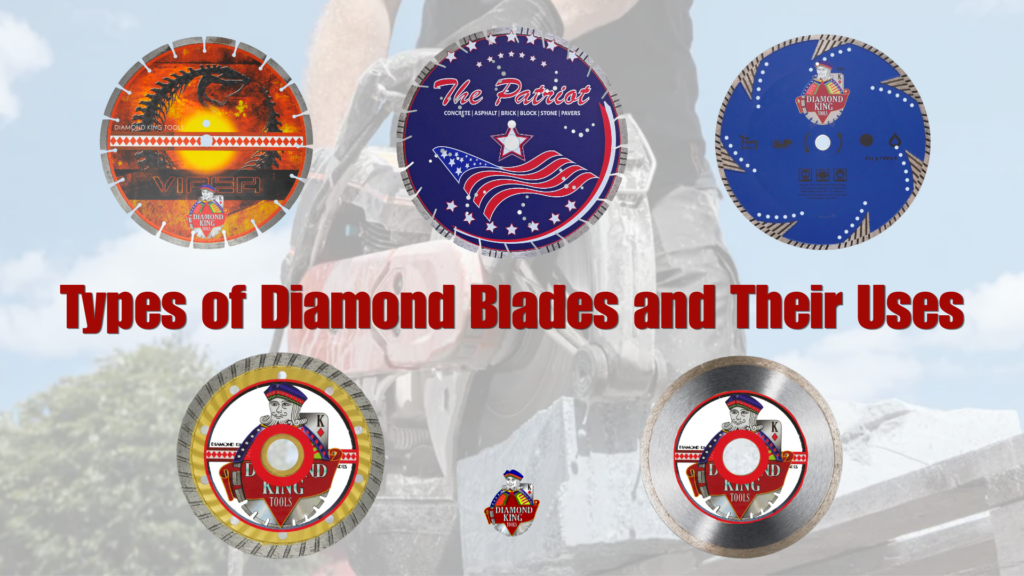
Diamond blades are essential tools in the construction, masonry, hardscaping, and concrete industries. However, not all diamond blades are created equal. One of the most common questions contractors ask is, “What are the different types of diamond blades and their uses?”
The answer depends on the material being cut, the desired finish, and the equipment being used. Choosing the right blade can improve cutting speed, increase blade life, and deliver better results on the jobsite.
If you’re trying to determine which diamond blade is right for your application, this guide breaks down the most common types of diamond blades and explains when to use each one.
Why Choosing the Right Diamond Blade Matters
Using the proper blade isn’t just about getting through the material. The right blade can help you:
- Cut faster and more efficiently
- Reduce strain on your saw
- Improve cut quality
- Minimize chipping and vibration
- Extend blade life
- Lower overall operating costs
Selecting the wrong blade can lead to poor performance, excessive wear, and unnecessary downtime.
1. Segmented Diamond Blades
Segmented diamond blades feature individual gullets or gaps between each segment. These gaps improve airflow and help remove debris during cutting.
Best Uses:
- Concrete
- Reinforced concrete
- Brick
- Block
- Masonry
- General construction applications
Benefits:
- Fast cutting speeds
- Excellent durability
- Improved cooling
- Ideal for dry cutting applications
Segmented blades are among the most popular options for professional contractors because they offer a great balance of performance and longevity.
2. Turbo Diamond Blades
Turbo blades feature a continuous rim with serrated or wavy edges designed to increase airflow while maintaining smoother cuts.
Best Uses:
- Concrete
- Pavers
- Brick
- Stone
- Masonry materials
Benefits:
- Faster cutting than continuous rim blades
- Cleaner finish than segmented blades
- Reduced chipping
- Suitable for wet or dry cutting
Turbo blades are an excellent choice when both speed and cut quality are important.
3. Continuous Rim Diamond Blades
Continuous rim blades have a smooth, uninterrupted edge.
Best Uses:
- Ceramic tile
- Porcelain tile
- Marble
- Granite
- Delicate materials
Benefits:
- Smooth, chip-free cuts
- Superior finish quality
- Excellent precision
These blades are often used with wet saws to keep temperatures low and improve performance.
4. General Purpose Diamond Blades
General purpose blades are designed to cut a variety of materials without changing blades between jobs.
Best Uses:
- Concrete
- Brick
- Block
- Pavers
- Stone
Benefits:
- Versatility
- Cost effectiveness
- Convenience
- Ideal for contractors working with multiple materials
General purpose blades are a popular choice for crews that need flexibility throughout the workday.
5. Asphalt Diamond Blades
Asphalt blades are engineered with specific bond characteristics to handle highly abrasive materials.
Best Uses:
- Asphalt
- Green concrete
- Abrasive surfaces
Benefits:
- Longer blade life in abrasive conditions
- Improved cutting efficiency
- Better performance on softer materials
Using a standard concrete blade on asphalt can significantly reduce blade life.
6. Specialty Diamond Blades
Certain applications require specialized blades designed for unique materials.
Examples Include:
- Ductile iron blades
- Rescue blades
- Crack chasing blades
- Tuck point blades
- Glass cutting blades
Benefits:
- Application-specific performance
- Increased productivity
- Better overall results
These blades help contractors tackle specialized jobs with confidence.
How to Choose the Right Diamond Blade
Before selecting a blade, ask yourself these questions:
- What material am I cutting?
- Am I wet cutting or dry cutting?
- Is speed or finish quality more important?
- How often will I use this blade?
- What saw am I using?
Answering these questions can help narrow your options and ensure you’re choosing the most effective blade for the job.
Final Thoughts
Understanding the different types of diamond blades and their uses can make a significant difference in productivity and profitability. From segmented blades built for speed to continuous rim blades designed for precision, each blade has a specific purpose.
By matching the blade to the material and application, contractors can maximize blade life, improve cut quality, and keep projects moving efficiently.
The next time you’re choosing a diamond blade, remember that the best blade isn’t necessarily the most expensive. It’s the one designed for the work you’re doing.