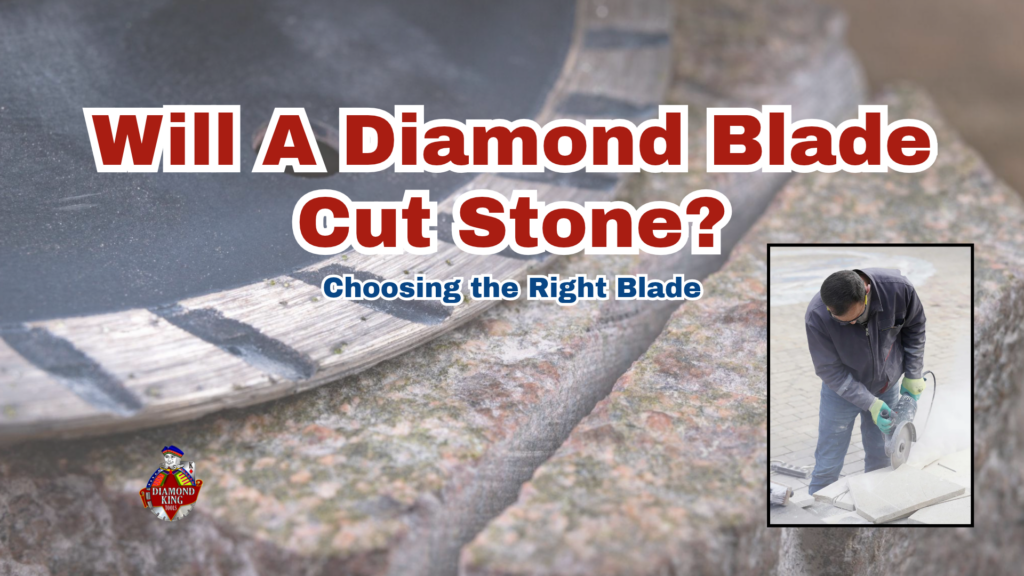
If you’ve ever worked with natural stone, pavers, or masonry, you may have wondered, “Will a diamond blade cut stone?”
The short answer is yes. Diamond blades are one of the most effective tools for cutting stone. They are commonly used to cut materials such as granite, marble, limestone, travertine, slate, sandstone, and stone pavers. However, not every diamond blade is designed for every type of stone.
Choosing the right diamond blade for the material can make a major difference in cutting speed, blade life, accuracy, and the quality of the finished edge.
How Does a Diamond Blade Cut Stone?
Unlike a traditional saw blade that cuts using sharp teeth, a diamond blade works primarily through abrasive grinding.
Industrial diamond particles are embedded into the blade’s cutting edge. As the blade rotates, the exposed diamonds grind away tiny amounts of the stone. The metal bond holding the diamonds gradually wears away, exposing fresh diamond particles and allowing the cutting process to continue.
This makes diamond blades particularly effective for hard and abrasive materials such as stone, concrete, and masonry.
What Types of Stone Can a Diamond Blade Cut?
Diamond blades can be manufactured for many different stone-cutting applications.
Common examples include:
- Granite
- Marble
- Travertine
- Limestone
- Slate
- Sandstone
- Quartzite
- Stone pavers
- Manufactured stone
- Engineered stone
Different types of stone have different levels of hardness and abrasiveness. Because of this, a blade designed for marble may not be the best choice for granite or quartzite.
What Is the Best Diamond Blade for Cutting Stone?
There isn’t one universal “best” diamond blade for every type of stone.
The right blade depends on the material and the type of cut you’re making.
Granite
Granite is extremely hard and dense. A diamond blade designed specifically for granite or other hard natural stone is typically the best choice.
Marble
Marble is generally softer than granite but can be more susceptible to chipping. A blade designed for marble can provide smoother, cleaner cuts and help minimize edge damage.
Pavers and Hardscape Stone
Contractors cutting stone pavers often need a blade that balances cutting speed with durability. A quality segmented or turbo-style blade may be appropriate depending on the specific material and equipment.
Quartzite
Quartzite is extremely hard and can be challenging to cut. Specialty diamond blades designed for hard natural stone or quartzite can provide better performance than general-purpose blades.
Specialized stone blades are available in a variety of designs and are engineered around the hardness and characteristics of the material being cut.
Wet Cutting vs. Dry Cutting Stone
Another important consideration is whether you should cut stone wet or dry.
Wet Cutting
Wet cutting uses water to cool the blade and cutting surface. It can also help control dust and produce a cleaner cut.
For many stone fabrication applications, wet cutting is preferred because it can reduce heat, minimize chipping, and extend blade life.
Wet cutting is commonly used with:
- Tile saws
- Bridge saws
- Stone fabrication equipment
- Larger masonry saws
Dry Cutting
Dry cutting can be useful when portability is important or when the application does not allow water.
However, dry cutting can generate significantly more dust and heat. Always follow the blade and equipment manufacturer’s instructions for the specific application.
Why Blade Selection Matters
Using the wrong diamond blade can make a stone-cutting job much more difficult.
A blade that isn’t designed for your material may:
- Cut slowly
- Wear prematurely
- Produce excessive chipping
- Overheat
- Require more pressure from the operator
- Deliver a poor-quality finished edge
The blade’s bond, segment design, diamond concentration, and rim configuration all contribute to how it performs.
For example, professional stone-cutting blades are available with continuous rims, turbo designs, and other configurations specifically engineered for different materials and desired finishes.
Can a Concrete Diamond Blade Cut Stone?
This is an important distinction.
A general-purpose concrete diamond blade may be capable of cutting some stone materials, particularly applications such as pavers or masonry. However, that doesn’t necessarily mean it is the best blade for precision stone cutting.
If you’re cutting expensive natural stone, countertops, slabs, or material where the finished edge will be visible, a blade specifically designed for that type of stone is usually a better choice.
The more specialized the application, the more important proper blade selection becomes.
Tips for Cutting Stone With a Diamond Blade
To get the best results from your diamond blade:
- Match the blade to the stone. Check the manufacturer’s application recommendations before cutting.
- Use the correct blade size. Make sure the blade is compatible with your saw.
- Follow the correct RPM. Never exceed the blade’s rated maximum speed.
- Don’t force the cut. Allow the diamonds to do the work.
- Use water when recommended. Wet cutting can improve cooling and cut quality.
- Keep the blade properly aligned. Avoid twisting or binding the blade.
- Wear appropriate safety equipment. Stone cutting can create significant dust and debris.
Final Thoughts
So, will a diamond blade cut stone? Absolutely. Diamond blades are specifically designed to cut many hard materials, including natural stone, granite, marble, pavers, and other masonry products.
The key is choosing the right diamond blade for the specific type of stone and cutting application. A blade designed for the material can provide faster cutting, longer blade life, better accuracy, and a cleaner finished edge.
Whether you’re a professional stone fabricator, concrete contractor, hardscape installer, mason, or DIYer, selecting the right diamond blade before you start cutting can save time, reduce material waste, and help you get the results you’re looking for.