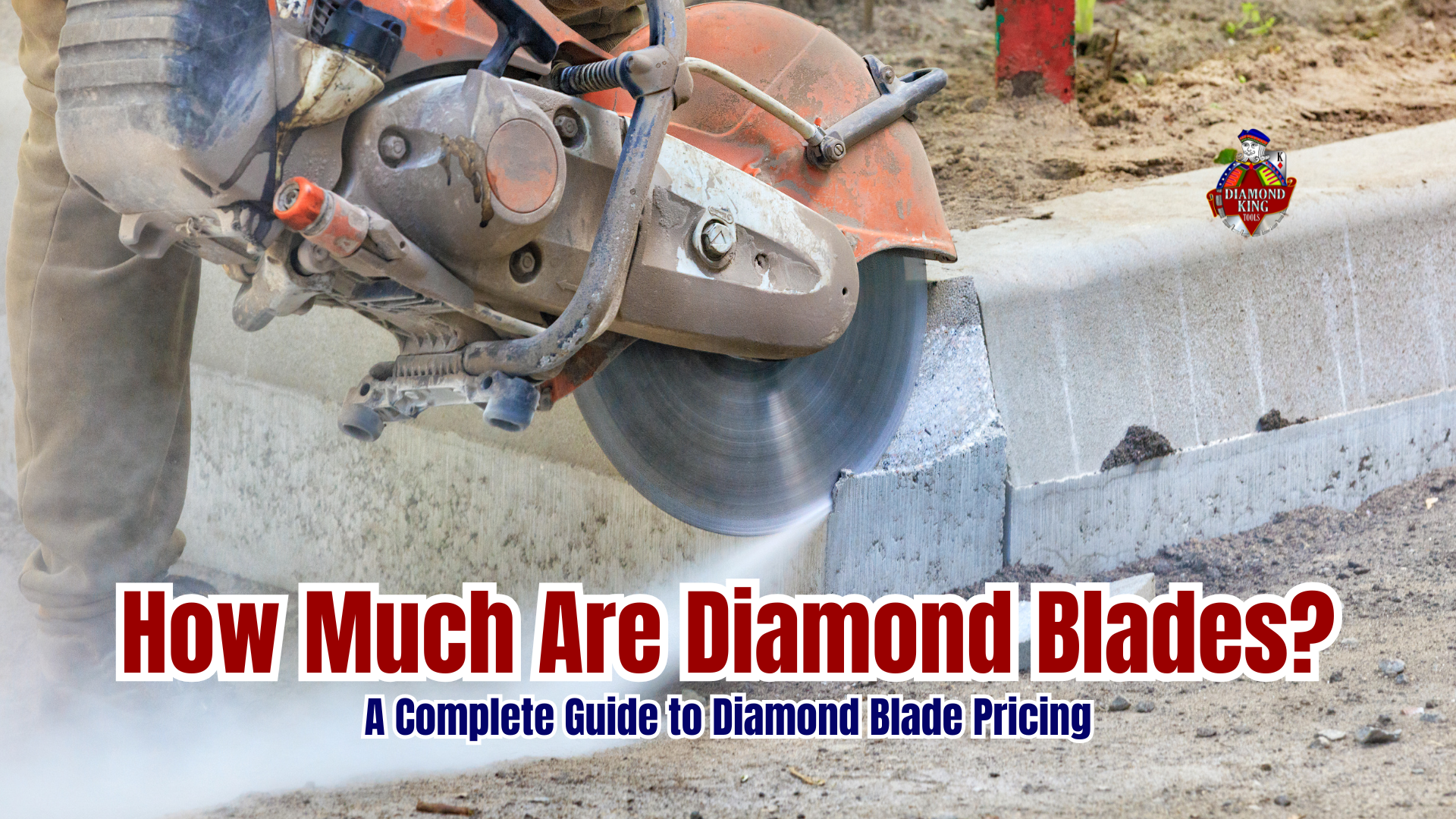
If you’re shopping for a new diamond blade, you’ve probably asked yourself, “How much are diamond blades?” The answer depends on several factors, including the blade’s size, quality, application, and the materials it is designed to cut.
Diamond blades are available at a wide range of price points, from budget-friendly options for occasional use to professional-grade blades engineered for demanding construction applications. While it may be tempting to choose the least expensive blade, understanding what you’re paying for can help you make a better investment and lower your overall cost per cut.
In this guide, we’ll explain what affects diamond blade pricing and how to choose the right blade for your project.
How Much Do Diamond Blades Cost?
Diamond blade prices vary based on blade diameter, manufacturing quality, and intended application.
As a general guide:
- Small diamond blades for angle grinders are often the most affordable.
- Mid-sized blades for tile saws and handheld cut-off saws are typically priced in the middle range.
- Large blades designed for walk-behind saws and heavy-duty equipment generally cost more because they contain more steel and diamond material.
Professional contractors often find that investing in a premium blade provides better value over time because of longer blade life and faster cutting performance.
What Affects the Price of a Diamond Blade?
Several factors determine the cost of a diamond blade.
Blade Size
One of the biggest factors is blade diameter.
Larger blades require:
- More steel
- More diamond segments
- More manufacturing materials
- More precision during production
Because of this, larger blades generally cost more than smaller ones.
Diamond Quality
Not all synthetic industrial diamonds are the same.
Premium blades often contain:
- Higher-quality diamonds
- Better diamond concentration
- More consistent diamond placement
These features improve cutting speed, durability, and overall performance.
Bond Formulation
The metal bond that holds the diamonds in place also affects pricing.
Different bond formulations are designed for specific materials, including:
- Concrete
- Reinforced concrete
- Asphalt
- Brick
- Block
- Stone
A properly matched bond allows new diamonds to become exposed at the correct rate, helping the blade maintain consistent cutting performance.
Blade Design
Diamond blades are available in several designs, each intended for different applications.
Segmented Blades
Segmented blades are commonly used for concrete, masonry, and general construction. They offer fast cutting and excellent durability.
Turbo Blades
Turbo blades provide a balance of speed and smoother cuts, making them popular for pavers, brick, and stone.
Continuous Rim Blades
Continuous rim blades are designed for precision cutting and are commonly used on tile, porcelain, and natural stone where minimizing chipping is important.
Specialty Blades
Some blades are engineered specifically for reinforced concrete, asphalt, ductile iron, rescue applications, or other specialized cutting tasks. These blades often use unique bond formulations and segment designs that can increase their cost.
Why Premium Diamond Blades Often Save Money
Although premium diamond blades usually have a higher purchase price, they often reduce overall operating costs.
Higher-quality blades typically provide:
- Faster cutting speeds
- Longer service life
- Fewer blade changes
- Less downtime
- Better cut quality
- Reduced strain on equipment
For contractors who cut concrete every day, these benefits can quickly outweigh the initial investment.
Should You Buy the Cheapest Diamond Blade?
Choosing the lowest-priced blade isn’t always the best value.
An inexpensive blade may wear out quickly, cut more slowly, or require more frequent replacement. Over time, this can increase labor costs and reduce productivity.
Instead of focusing only on purchase price, consider:
- The material you’ll be cutting
- How often you’ll use the blade
- The performance you expect
- The blade’s expected lifespan
- The reputation of the manufacturer
Selecting the right blade for the application often results in lower costs over the life of the blade.
How to Choose the Right Diamond Blade
Before purchasing a blade, ask yourself:
- What material will I be cutting?
- Will I be wet cutting or dry cutting?
- What blade size does my saw require?
- Am I looking for speed, longevity, or a smoother finish?
- Is this for occasional use or daily professional work?
Answering these questions will help you narrow your options and choose a blade that delivers the best performance for your needs.
Final Thoughts
So, how much are diamond blades?
The price of a diamond blade depends on its size, quality, bond formulation, and intended application. While there are blades available for almost every budget, the best choice is the one that matches your material, equipment, and workload.
A quality diamond blade may cost more initially, but it can provide faster cuts, a longer lifespan, and better overall value. Whether you’re a professional contractor or a weekend DIYer, choosing the right blade can improve productivity, reduce equipment wear, and help you achieve cleaner, more efficient cuts.