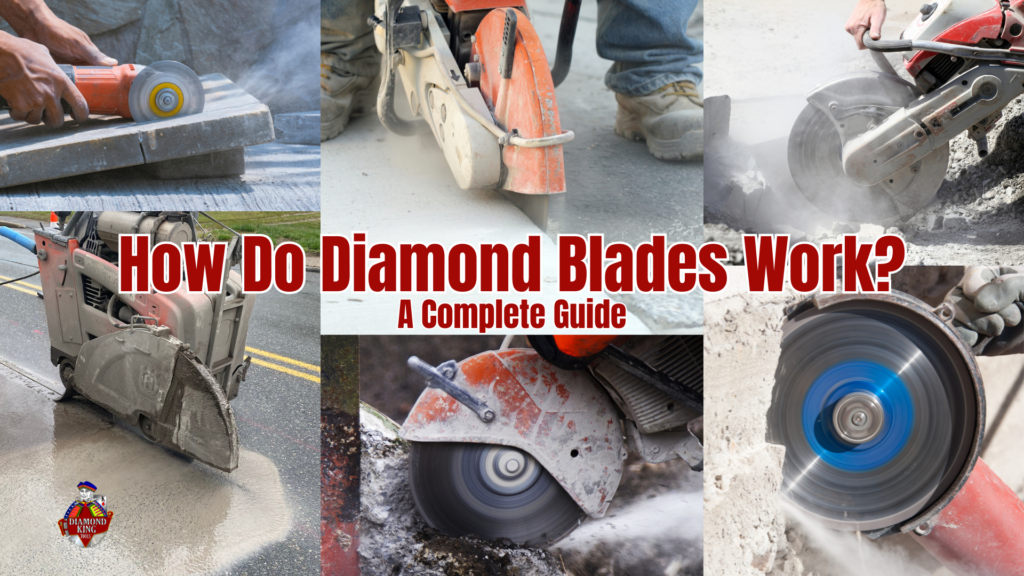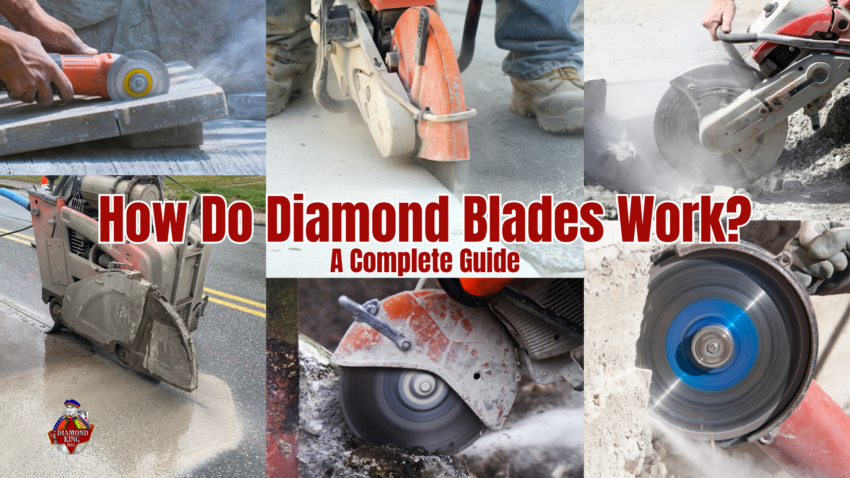
Diamond blades are one of the most important tools used in construction, masonry, hardscaping, and roadwork. They are designed to cut through extremely tough materials like concrete, asphalt, brick, block, stone, and pavers. But many people still ask the same question: How do diamond blades work?
The answer is surprisingly different from what most people expect.
Unlike traditional saw blades that cut using sharp teeth, diamond blades work through a grinding action created by industrial diamonds embedded in the blade’s segments.
What Is a Diamond Blade?
A diamond blade is a steel core blade with segments attached around the edge. These segments contain synthetic industrial diamonds mixed with metal powders.
The diamonds are the part that actually cuts the material.
Because diamonds are one of the hardest materials on earth, they can grind through hard surfaces that normal blades cannot handle efficiently.
How Do Diamond Blades Actually Cut?
Many people think diamond blades slice through concrete like a knife cuts wood. In reality, diamond blades grind away material instead of cutting with teeth.
As the blade spins:
- The exposed diamonds scrape and grind the surface
- Small pieces of concrete or asphalt wear away
- The metal bond holding the diamonds slowly wears down
- New sharp diamonds become exposed
This continuous process allows the blade to keep cutting effectively over time.
Why the Metal Bond Matters
The metal bond in a diamond blade is extremely important because it controls how quickly new diamonds are exposed.
Soft Bond Blades
Soft bond blades wear down faster, exposing new diamonds more quickly. These are typically used for very hard materials like cured concrete or stone.
Hard Bond Blades
Hard bond blades wear more slowly and are often used for softer, abrasive materials like asphalt or green concrete.
Choosing the wrong bond can reduce cutting speed and shorten blade life.
Wet Cutting vs. Dry Cutting
Diamond blades can be designed for either wet cutting, dry cutting, or both.
Wet Cutting
Wet cutting uses water to:
- Cool the blade
- Reduce dust
- Extend blade life
- Improve cutting performance
This method is common in heavy-duty concrete cutting applications.
Dry Cutting
Dry cutting is more convenient and portable but creates more dust and heat. Operators usually make shorter cuts to allow the blade to cool.
What Materials Can Diamond Blades Cut?
Diamond blades are versatile and can cut many materials, including:
- Concrete
- Asphalt
- Brick
- Block
- Stone
- Tile
- Pavers
Different blades are optimized for specific materials, which is why selecting the right blade matters.
Why Contractors Use Diamond Blades
Diamond blades are popular because they offer:
- Faster cutting speeds
- Longer lifespan
- Cleaner cuts
- Better durability
- Reduced downtime
For professional contractors, choosing the right blade can improve productivity and reduce overall operating costs.
Final Thoughts
So, how do diamond blades work? Instead of cutting with teeth, they use industrial diamonds to grind through hard materials. The blade continuously exposes fresh diamonds as it wears, allowing it to maintain cutting performance over time.
Understanding how diamond blades work can help contractors choose the right blade, improve efficiency, and get better results on the jobsite.
Looking for new diamond blades? Visit DiamondKingTools.com today or reach out to us at (877) 700-2022 or [email protected]