If you work with brick or own a masonry structure, you have probably heard the term tuckpointing. But what is tuckpointing exactly?
Tuckpointing is the process of removing deteriorated mortar from between brick or stone joints and replacing it with new mortar. Over time, weather, moisture, freeze thaw cycles, and general wear cause mortar joints to crack, crumble, or recede. When this happens, the structural integrity and appearance of the masonry can suffer.
Tuckpointing restores those joints by carefully grinding out the damaged mortar and applying fresh mortar that matches the original color and profile. The result is a cleaner look and stronger wall.
Why Tuckpointing Is Important
Tuckpointing is not just cosmetic. It plays a critical role in protecting masonry structures.
1. Prevents Water Damage
Mortar joints act as a barrier that keeps water from entering brick walls. When mortar deteriorates, water can seep behind the bricks. This can lead to internal damage, mold growth, and costly structural repairs.
Proper tuckpointing seals the joints and helps prevent water intrusion.
2. Protects Structural Integrity
Bricks rely on mortar to hold them together and distribute load evenly. When mortar weakens, the wall becomes less stable. Over time, this can lead to cracking, shifting, or even brick failure.
Replacing damaged mortar strengthens the overall structure and extends its lifespan.
3. Improves Appearance
Crumbling mortar joints can make even a well-built structure look neglected. Tuckpointing refreshes the appearance of brickwork, creating clean, defined lines and restoring curb appeal.
For commercial buildings and residential properties alike, this can make a noticeable difference.
How Tuckpointing Is Done
The process typically involves several steps:
- Inspecting the mortar joints to identify damaged areas
- Using a grinder or specialized tool to remove old mortar
- Cleaning debris from the joints
- Applying new mortar and shaping it to match the original finish
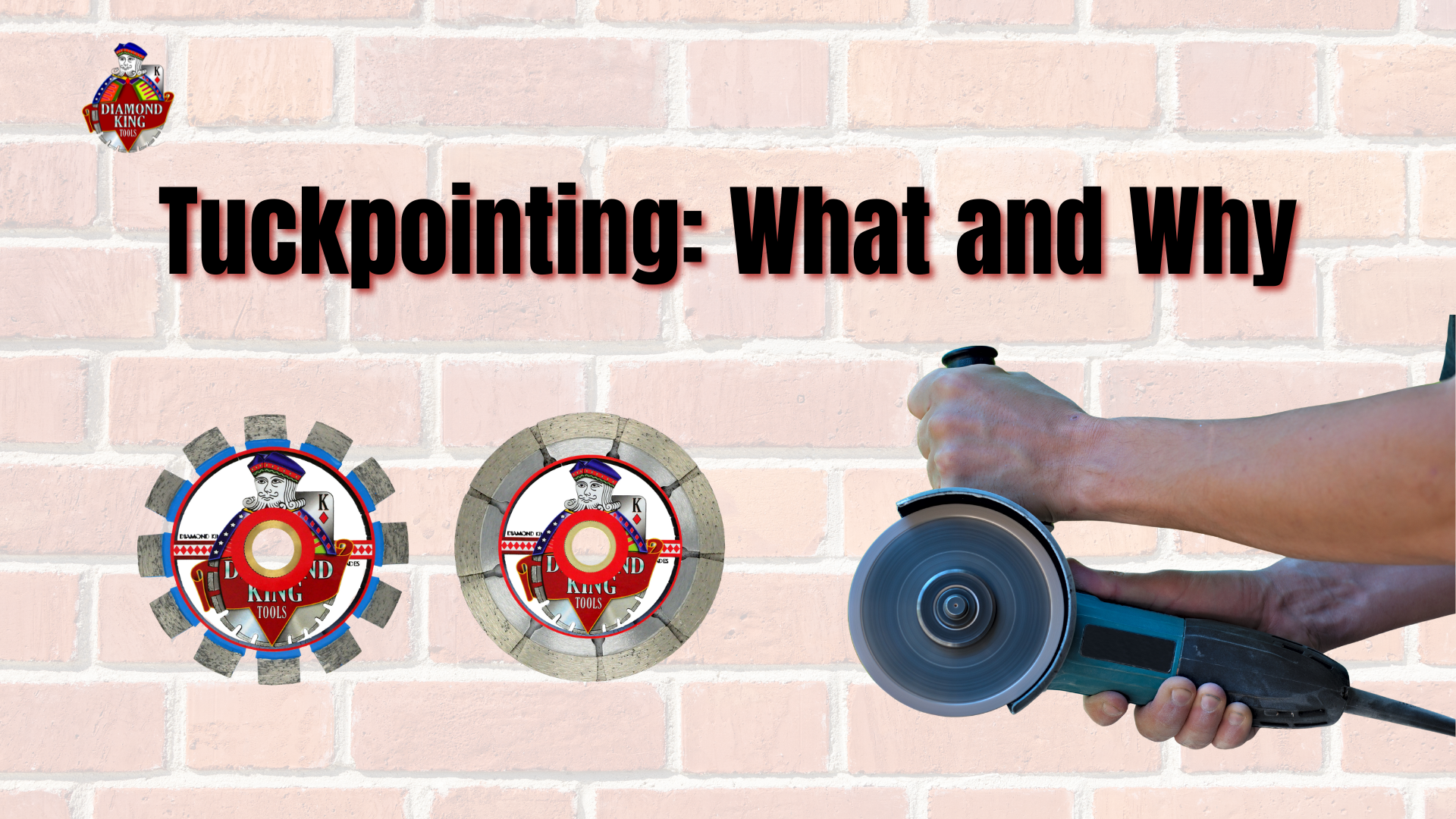
Using the correct tools and proper technique is essential. Removing too much mortar or damaging the brick edges can create more problems than it solves. Precision cutting tools and the right diamond blades help ensure clean, controlled removal of old mortar.
When Should You Consider Tuckpointing?
Signs that tuckpointing may be needed include:
- Cracked or missing mortar
- Loose bricks
- Water stains on interior walls
- Gaps between bricks
- Visible deterioration along mortar lines
Addressing these issues early prevents more extensive repairs later.
Final Thoughts
Understanding what tuckpointing is and why it matters can help property owners and contractors protect masonry structures for the long term. It is a practical maintenance step that prevents water damage, strengthens brickwork, and improves overall appearance.
Whether maintaining a residential home or a commercial building, it is an investment in durability and structural health.
Need Tuckpointing diamond blades? DiamondKingTools.com has what you need!
Call Us: (877) 700-2022
Email Us: [email protected]