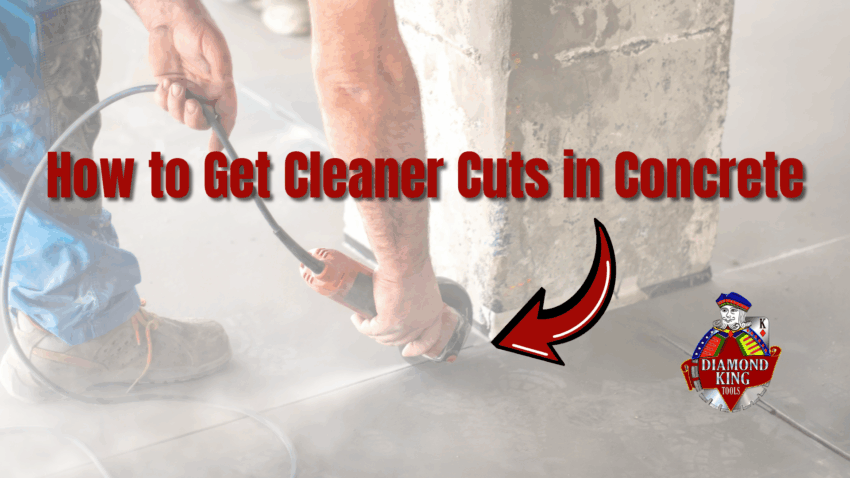
Chipped edges and blowout at the end of a concrete cut can turn an otherwise solid job into a costly problem. Whether you are cutting sidewalks, slabs, curbs, or decorative concrete, clean cuts are critical for both appearance and structural integrity. The good news is that most chipping issues are preventable and with the right setup and technique you can easily get cleaner cuts in concrete.
Here are proven tips professionals use to get cleaner cuts in concrete with minimal edge damage.
Choose the Right Diamond Blade for the Job
One of the biggest factors in clean cuts is blade selection. A blade designed specifically for concrete will produce smoother results than a general purpose blade used in the wrong application. Softer bond blades work better on hard concrete, while harder bond blades suit softer materials.
Segment design also matters. Turbo and segmented blades cut aggressively, while continuous rim or fine-segment blades tend to reduce chipping. Matching the blade to the concrete type and finish is the first step to preventing blowout.
Score the Cut Before Going Full Depth
Instead of plunging straight to full depth, start with a shallow scoring pass. A light initial cut helps control the surface and reduces the chance of edge spalling. After scoring, gradually increase depth with additional passes.
This method is especially important when working with cured or decorative concrete where appearance matters.
Control Your Cutting Speed
Forcing the saw through the cut is one of the fastest ways to cause chipping. Excessive feed pressure creates vibration and heat, which leads to rough edges. Let the blade do the work and maintain a steady, controlled pace.
Slowing down slightly often results in a cleaner cut and longer blade life.
Use Water When Possible
Wet cutting significantly reduces friction, dust, and heat buildup. Water helps cool the blade and flush debris from the cut, allowing diamonds to stay exposed and cut evenly. This leads to smoother edges and less blowout, especially at the exit point.
If dry cutting is required, take shallow passes and allow cooldown periods between cuts.
Support the Concrete Properly
Unsupported concrete is more likely to chip or break away at the end of a cut. Whenever possible, ensure the slab or section being cut is supported on both sides. For slab work, cutting from both sides or stopping just short of full depth and finishing carefully can help reduce blowout.
Maintain and Break In Your Blade
A new diamond blade needs a proper break-in period to expose diamonds evenly. Skipping this step can lead to glazing and rough cutting early on. If a blade starts cutting poorly, dressing it on an abrasive material can restore performance and improve cut quality.
Final Thoughts
Getting cleaner cuts in concrete is less about brute force and more about technique, blade selection, and patience. By scoring first, controlling speed, using water, and choosing the right diamond blade, you can dramatically reduce chipping and blowout while improving overall job quality. Clean cuts not only look better, they save time, reduce rework, and extend blade life.
Need diamond blade recommendations for cleaner cuts?
Call us: (877) 700-2022
Email us: [email protected]
Visit: DiamondKingTools.com