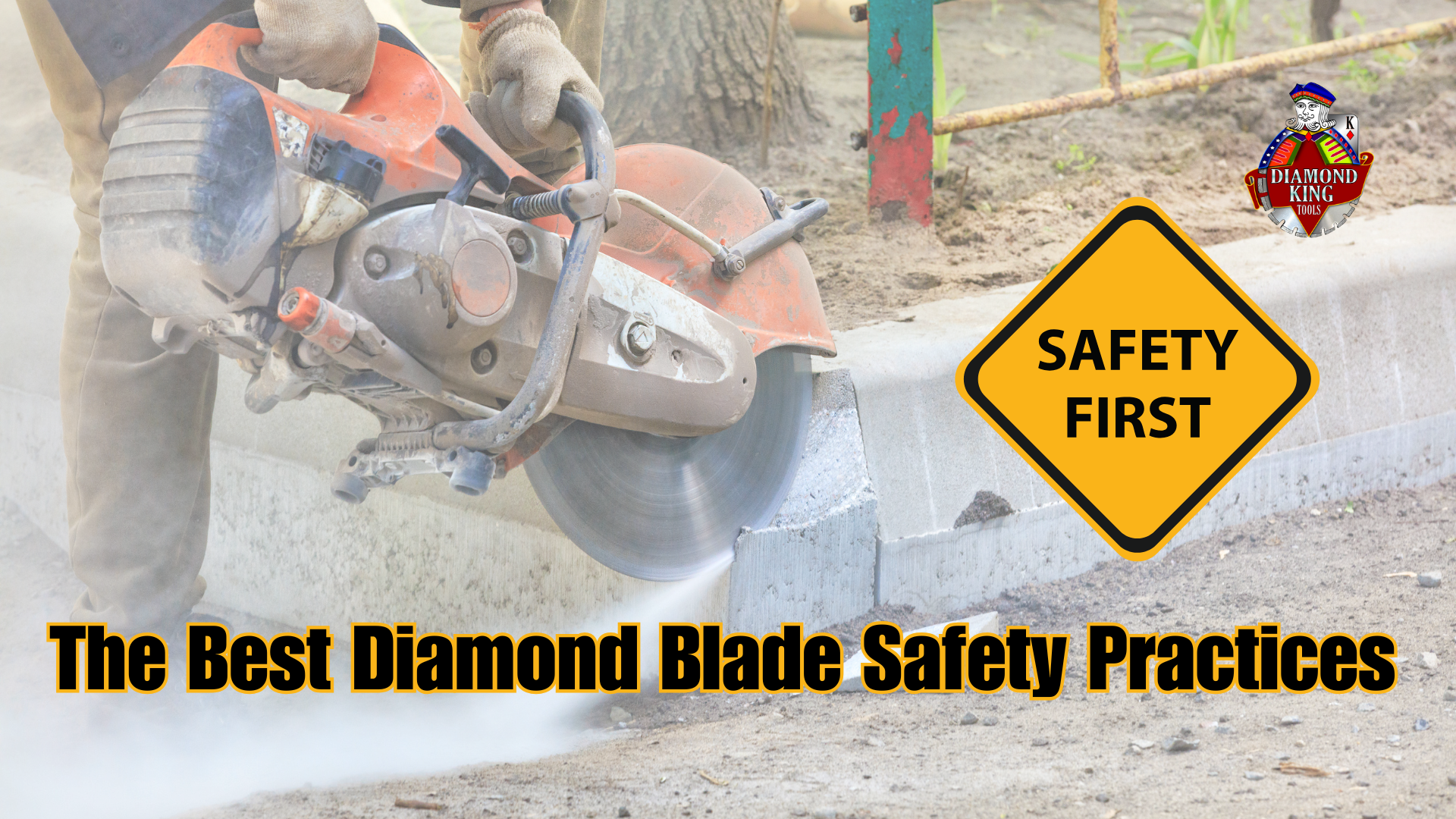
Diamond blades are powerful tools designed to cut through concrete, asphalt, stone, brick, and masonry. While they deliver speed and precision, they also demand proper safety practices. Fully understanding diamond blade cutting safety helps prevent injuries, equipment damage, and costly downtime on the jobsite.
Below are best practices every contractor and operator should follow before and during cutting operations.
Choose the Right Blade for the Material
Safety starts with blade selection. Every material requires a specific bond hardness and blade design. Using the wrong blade can cause overheating, glazing, or segment damage.
Concrete, asphalt, stone, and masonry all behave differently under load. Always match the blade to the material and confirm whether it is designed for wet or dry cutting. A properly matched blade cuts more efficiently and reduces stress on the saw and operator.
Inspect the Blade Before Every Use
Before mounting a blade, inspect it carefully. Look for cracks, missing segments, excessive wear, or warping. Never use a damaged blade.
Confirm the blade diameter, arbor size, and maximum RPM rating match your saw. Overspeeding a blade is extremely dangerous and can lead to segment loss or blade failure.
Also ensure the blade is mounted in the correct rotation direction. Incorrect rotation reduces cutting efficiency and increases heat buildup.
Wear Proper Personal Protective Equipment
PPE is critical when cutting with diamond blades. At a minimum, operators should wear:
- Eye protection with side shields
- Hearing protection
- Cut resistant gloves
- Steel toe boots
- A respirator or dust mask rated for silica exposure
Silica dust is a serious health hazard when cutting concrete or masonry. Whenever possible, use wet cutting methods or approved dust suppression systems.
Use Proper Cutting Techniques
Let the blade do the work. Forcing the cut increases heat, wear, and the risk of binding. Apply steady, controlled pressure and maintain a straight cutting path.
For deeper cuts, use step cutting. Start with a shallow pass and gradually increase depth. This reduces stress on the blade and helps prevent kickback.
If dry cutting is required, take regular breaks to allow the blade to cool. Overheating is one of the leading causes of blade failure.
Maintain a Safe Work Area
Keep bystanders clear of the cutting zone. Secure the material being cut so it cannot shift or pinch the blade. Maintain a stable stance and always operate the saw with both hands.
Never cut above shoulder height or in awkward positions. Good body positioning improves control and reduces fatigue.
Final Thoughts
Diamond blade cutting safety is about preparation, awareness, and proper technique. By choosing the right blade, wearing proper PPE, inspecting equipment, and using correct cutting methods, operators can work more efficiently and safely. A few extra minutes of preparation can prevent serious injuries and extend the life of both the blade and saw.
Need new diamond blades, core bits, power equipment, or safety gear? Visit DiamondKingTools.com today!
Call Us: (877) 700-2022
Email Us: [email protected]